South Africa has officially acceded to Afreximbank, triggering a Sh1.03 trillion country programme aligned with its development priorities.
The move deepens Africa’s trade finance integration, strengthens industrial growth and positions South Africa at the centre of continental trade and investment efforts amid shifting global economic dynamics.
According to the statement released by Afreximbank on Wednesday, the move follows parliamentary approval in 2025 and formally brings Africa’s most industrialised economy into Afreximbank’s membership.
The agreement comes at a time of global trade fragmentation, with protectionist policies and shifting blocs reshaping international commerce.
To operationalise the partnership, Afreximbank is launching the programme which aligns with South Africa’s National Development Plan 2030 and national industrial priorities.
The initiative targets manufacturing, energy, mining, healthcare, financial services, industrial parks, special economic zones and regional value chains, with the aim of expanding intra-African trade and investment flows.
Afreximbank President and Chairman of the Board, George Elombi, described South Africa’s accession as transformative for the continent’s trade architecture.
“This affirmation of the membership of South Africa in Afreximbank marks a decisive step towards uniting around the continent’s economic interests, the interests of our mother continent,” he said.
He added that South Africa’s membership brings the country into the heart of Afreximbank’s vision and its aspirations to promote the change so much desired in the structure of Africa’s trade.
Elombi confirmed that Afreximbank’s existing project pipeline in South Africa already exceeds Sh774 billion spanning healthcare, financial services, manufacturing, energy, industrial development and mining.
He said the newly announced programme was developed jointly with the Department of Trade, Industry and Competition and aligned with South Africa’s long-term development goals.
“I am therefore pleased that together with the South African Department of Trade, Industry and Competition, we have put together what we consider an important package of Sh1.03 trillion for South Africa,” he said, noting that the programme targets key strategic areas.
South Africa is already the continent’s largest contributor to intra-African trade, accounting for 19.1 percent of total African trade in 2024.
Afreximbank says this positions the country to leverage the bank’s trade finance infrastructure, expertise and pan-African reach to deepen export relationships across the continent.
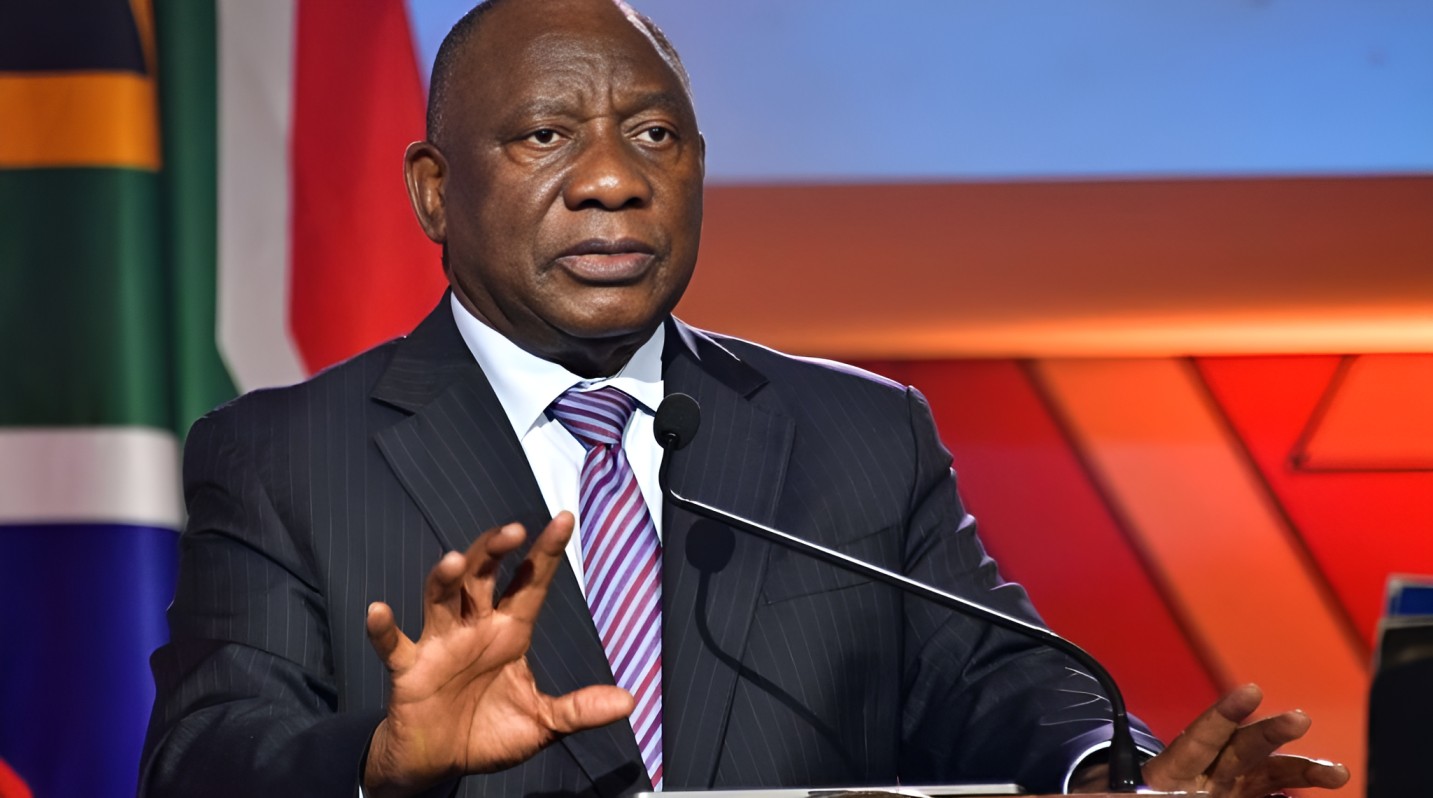
President Cyril Ramaphosa welcomed the accession, framing it as a milestone in Africa’s economic integration. “Today we mark a major milestone in our quest to realise what I would call the economic integration of our continent,” he said.
He said South Africa’s membership affirms South Africa's commitment to African industrial development and to deepening trade, investment and development across its continent.
President Ramaphosa said the country programme would be operationalised with a finance package supporting strategic trade and industrial projects, with a particular focus on inclusive growth.
“One of those areas that we are going to focus on with immediate effect is to give muscle to our Transformation Fund, to support black businesses who, were held back by the apartheid system from being active participants in the economy of our country,” he said.
He also praised Afreximbank’s track record, saying the institution had demonstrated its resilience, its innovative capability and that it has impact.
“This partnership will strengthen in more ways than one South Africa’s ability to support South African exporters, industrial projects and regional value chains while advancing our continent’s progress,” he added.
Following the accession, both parties agreed to pursue joint trade and development initiatives, including the South Africa-Africa Trade and Investment Promotion Programme, financing for industrial parks and special economic zones, project and asset-based finance, and support for creative and cultural industries.
The agreement formally anchors South Africa into Africa’s trade finance ecosystem, positioning it as a central driver of export-led growth, regional integration and the continent’s long-term economic transformation.































Comments
Sign in with Google to comment, reply, and like comments.
Continue with Google